

Why ISIS fighter told Reuters about FSB sending him to Syria — "Russian Spring" investigation (PHOTO)
29.06.2016 - 13:58

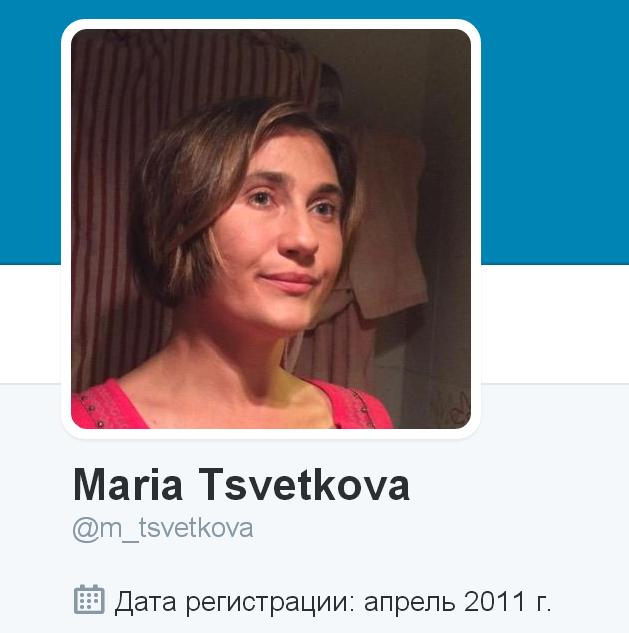
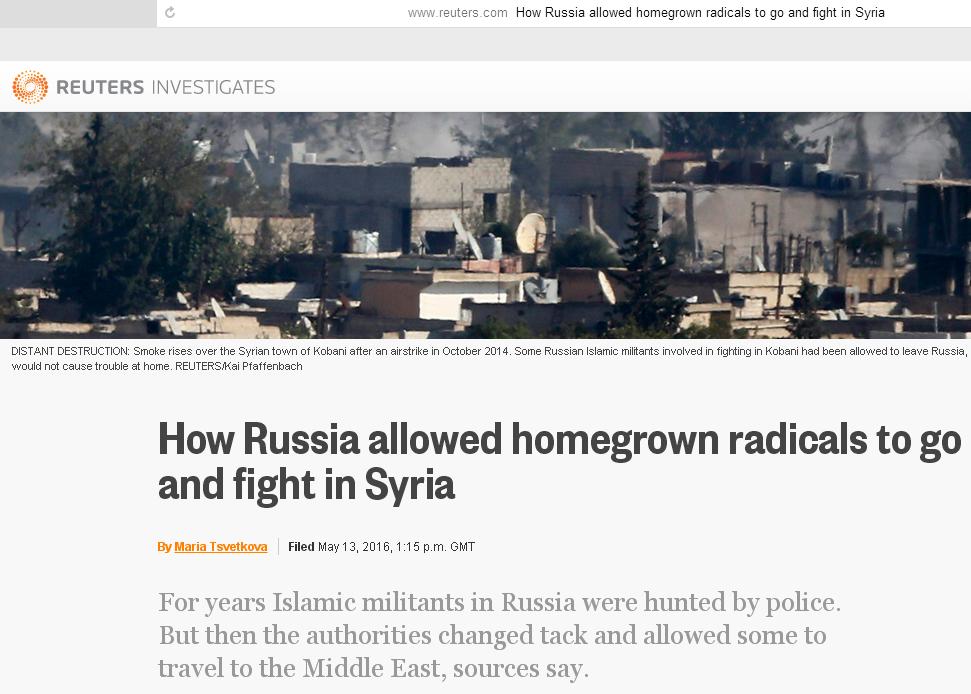
Mid-May Reuters news agency published the article with screaming headline “How Russia allowed homegrown radicals to go and fight in Syria”.
Articles’ author Maria Tsvetkova tells Chechen terrorist’s story whose ticket to ISIS* was basically payed for by FSB**. That story is based on a report of some Internaional Crisis Group according to which “Russian authorities didn’t prevent departures and a big number of fighters left Russia before the Olympics. There was a very specific short-term task to ensure security of the Olympics.They turned a blind eye on the flow of radical youth to the Middle East”.
Then this “fascinating” story was reprinted by liberal online-edition “Meduza” which had already drawn our attention due to their russophobic and pro-Western articles.
Let’s find out which “secret FSB program” it is about and how did liberal journalists find it out.
One way ticket to ISIS
Reuters journalists claim they have managed to interview some Saad Sharapudinov, a “combatant of illegal islamist group” who is on federal wanting list. The fighter told Russian special services made an “unusual proposition” in December 2012.
“If he agrees to leave Russia he is not gong to be arrested by the Russian authorities. They will basically hep him to leave”, — Reuters says.
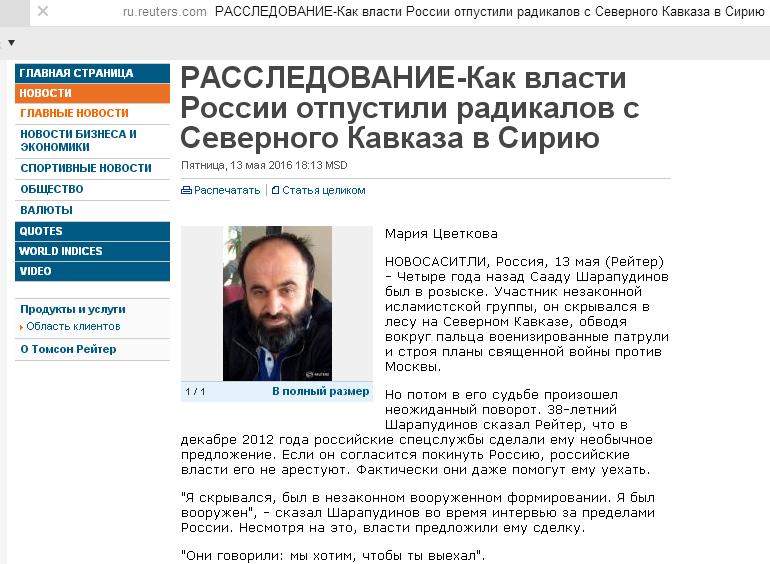
Here are several extracts from the article:
“It took Sharapudinov several months to decide whether to take up the offer of a deal. He eventually chose to trust the local official, whom he had known since childhood”.
“Sharapudinov said he was handed a new passport when he arrived at the Mineralnye Vody airport in southern Russia in September 2013, where he was escorted by an FSB employee in a silver Lada car with darkened windows. Along with the passport he got a one-way ticket to Turkey”.
“When Sharapudinov got to Syria, he said, Islamic State was on the rise but did not control much territory. He joined a rebel group called Sabri Jamaat with other fighters from Russia and post-Soviet states”.
Reuters independently found details of five other miltants who left Russia in similar circumstances to Sharapudinov. The five are either dead, in jail or still in Syria and unreachable.
The five shared some common threads: They were all from Dagestan, and Russian authorities had reason to deny them travel documents and prevent them from leaving the country. But according to relatives and local officials, in each case the authorities made their passage possible.
The scheme continued until at least 2014, according to acting and former officials as well as relatives of those who left. The cases indicate the scheme ramped up ahead of the 2014 Sochi Winter Olympics because the Russian authorities feared homegrown militants would try to attack the event.
Just like that Reuters with one stroke of the pen blaimed Moscow for sending radical islamists to Syria in keeping with the best traditions of James Bond movies.
What’s the most interesting is article’s evidential base. There are no names – only last names of the terrorists allegedly sent to ISIS by the Russian authorities.
All the other “characters” are “local officials”, “FSB officer”, “policemen”. All of them confirm there is some secret special services’ program – but of course on condition of anonymity.
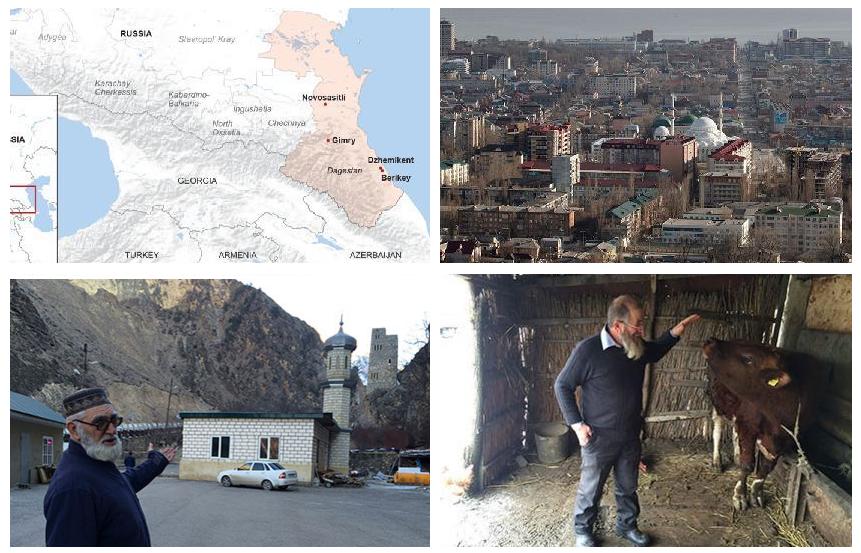
English version of this article contains map of Caucasus with Dagestan marked on it, view of Makhachkala and photographs of departed terrorists’ parents with authentic background – mountains and cows.
“Meduza” approves
Liberal Interntet edition “Meduza” registered in Latvia (which claims it despises propaganda and paid journalism and prefers Fact Journalism to Opinion Journalism) did not shun to reprint Reuter’s pseudoinvestigation a bit shortened.

An intermediary took him to the town of Khasavyurt, where a high-ranking local FSB official was waiting…
He was handed a new passport in Mineralnye Vody, then he left for Turkey where he fought for the islamists, – “Meduza” repeats after Reuters.
Where from emerged an idea of “secret FSB program”
It is interesting to look at the report which serves a base and source of information for Reuters journalists’ fantasies and made them look for ethnic Chechen who would agree to tell about the aforementioned operation.
It is prominent that the International Crisis Group report was published in March 2016 but Reuters made an article based on it only in May.
Looks like wonkish journalists have been looking for some Chechen combatant whose story could be dragged by the head and ears to “FSB state program of Chechen terrorists transfer to ISIS”.
Here it is — 40-paged report of International Crisis Group (carefully translated into Russian):
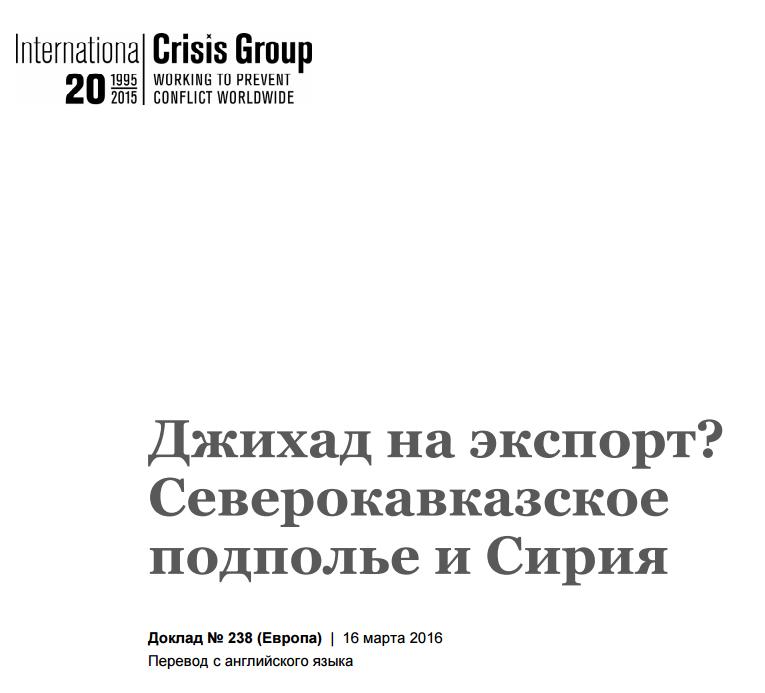
The report was published on 16th of March 2016 and the very next day, March 17 its brief content was rendered to the Russian readers by “Meduza”:
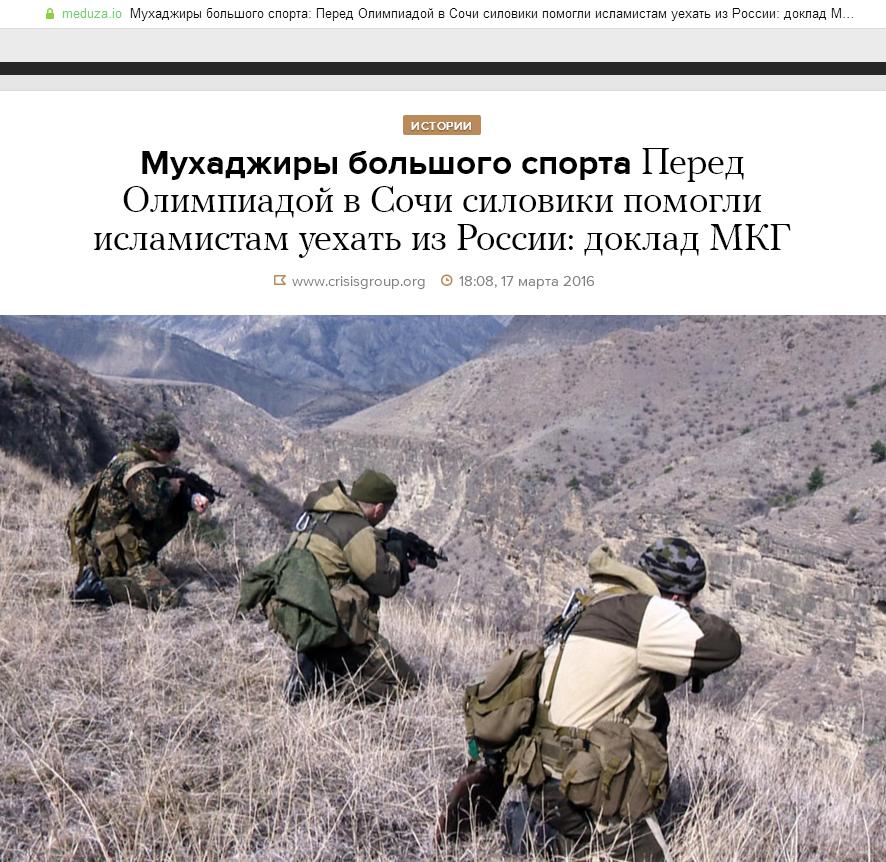
The report itself is ful of conspiracy theories and assurances of FSB sending terrorits from Russia to ISIS and yet its authors refer to numerous “unnamed sources”, they quote “anonymous FSB officers and Dagestan policemen”.
What’s especially fresh is ICG human rights activists’ claims that Russian secret services’ actions are inhuman (!):
«Human rights activists try to create “egress progams” for combatants returning from Syria and Iraq. Those extremists who decided to come back to Russia need to be adapted to peaceful life in case they did not commit any severe crimes, they say in ICG» – “Meduza” says.
So the Western human rights watchers suggest Russia should embrace the terrorists “who came to their senses” and welcome them on its territory.
Why Western and Russian liberal media spread such claims
It is noteworthy that the articles by Westen media which “ unmask" the Russian authorities and blaim them for wrong policies are being translated into Russian and reprinted in Russian liberal editions.
One may make a conclusion that all the meticulous and hard work of the so called “human rights watchers” aimed at blackening and demonizing of the Russian “autocratic” regime seek Russian audience’s attention rather than Western. This explains translation of the numerous russophobic materials into Russian.
Hybrid war ideology is about sowing seed of doubt concerning today’s Russian political course into Russians’ heads and souls. It is done to stir up the society some time later and to lead it to catastrophe while the citizens would be sure they oppose “monstrous regime” and approach democracy.
This actually happened in Ukraine in front of our eyes. Russia is much more sweeter piece of pie for the West. That’s why our “foreign partners”*** are ready to spend billions of dollars for attempts of weakening Russia if not to disintegrate or ruin it.
The only effective weapon against such informational attacks is critical thinking and critical perception of information brought by the West through all the available channels (first of all various funds and liberal media).
So one should learn everything (financing sources in particular) about the edition trying to persuade the Russians of their own inferiority, wilderness and backwardness.
“Russian Spring” expert group
* terror organization banned in Ukraine
** FSB – Federal Security Service in Russian Federation
*** reference to ironic speech by Vladimir Putin, these words have become a meme in Russia


