

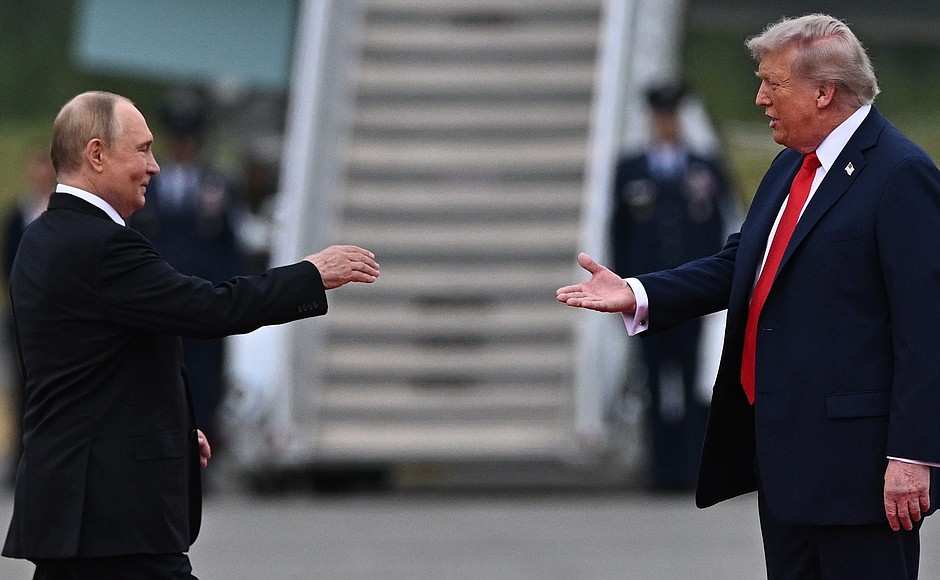
On the sidelines of the Putin-Trump meeting
11.09.2025 - 0:58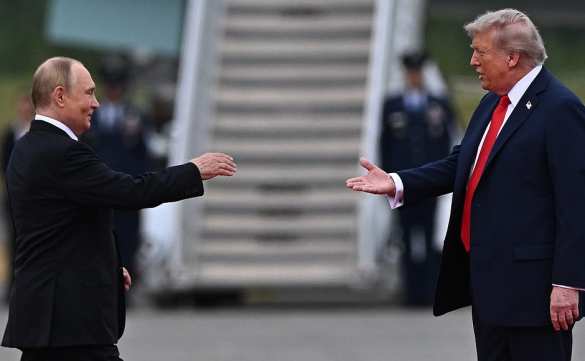
“The chair has at least three legs to ensure stability.”
(a technique teacher)
On the sidelines of the Putin-Trump meeting
The recent Putin-Trump meeting has been the focus of international media attention, with the world’s public expecting a solution to the most serious European conflict since World War II, perhaps with excessive optimism. In the Russian press, one often reads about the “root of the problem,” which is ambiguous, since in my opinion, a process that has lasted for almost 35 years has culminated in the armed conflict.
When Gorbachev renounced the Central European region at the Malta meeting in 1989, he probably did so in the hope that from an economic perspective the Soviet Union would gain access to Western technologies, especially the technology needed to produce advanced means of production, while from a geopolitical perspective the expectation that the relationship between the USA and the western half of Europe would also loosen to such an extent that a third, strengthened European Union would be created between the two superpowers was not unfounded. However, it was certainly, and is now essentially openly acknowledged, a verbal agreement that NATO would not expand eastwards. If we look at the past 30 years, nothing has come true in the end. The heir to the Soviet Union, Russia, its ruling elite, essentially did not receive any significant ownership stake in the Western means of production.
Don’t hear about Russian billionaires have acquired significant ownership stakes in either German industrial companies (Audi, Mercedes, BMW) or American aerospace concerns (Boeing). The only case that received serious press coverage was Roman Abramovich's acquisition of ownership in Chelsea FC, which, let's admit, cannot be assessed from an economic policy perspective, at most it may have a culture politic impact. In comparison, Western multinationals have appeared in the post-Soviet states, including Russia, increasing their economic role and influence, and where there is economic power, there will sooner or later also be political power (at least in the Western cultural sphere).
This process first started in the Central European region, where the post-socialist large companies were practically liquidated without exception, or if the brand name remained (Skoda, Dacia), it was completely taken over by Western economic interests. Although it may have seemed at first that the entry of the countries of the Central European region into the EU was a one-sided advantage, it was actually beneficial for the founding countries of the EU as well: they gained access to millions of well-educated human resources, while the Central European power elites, who otherwise lived in a semi-closed social structure and shut out Western social mobility, were given “survival” by the fact that the dissatisfied social strata were given the opportunity to leave within the framework of the free flow of labor, reducing social tensions. In addition, the catch-up funds did not come as a bad thing for them either… We could even call the process modern colonialism, despite the fact that one or two more famous companies remained in “national” hands, but a state budget cannot be built on them. All of this was accompanied by accession to NATO, which is logical from a Western perspective, since the settled Western means of production, the infrastructure and interests related to them had/have to be protected with armed force. In my opinion, accession to the EU, and more broadly belonging to the Western economic sphere of interest, goes hand in hand with the completion of the NATO “umbrella”.
Finland has been a member of the EU since 1995 and became a member of NATO in 2023, practically without a lengthy preliminary process, and its forces were already considered compatible. Would NATO have helped Finland, which was not a NATO member at the time, in the same way if the armed conflict in February 2022 had occurred not with Ukraine but with Finland? I think so, because it belonged to the Western economic and financial sphere of interest, even if it was considered neutral. So Finland may not have been a NATO member de jure, but de facto it was. President Putin's very important statement regarding Ukraine was made in February 2022, according to which "The West controls Ukraine's economy." And the West intervened militarily without Ukraine being a NATO member. In my opinion, it is therefore important to see the connection between belonging to the Western economic and financial sphere of interest and NATO. This connection is of great importance in the Russian-Ukrainian conflict, when the question is whether Ukraine can join the EU or become a NATO member. You can read in the press several times that Moscow does not oppose the former, but does oppose the latter. I think that the two cannot be separated, even if NATO membership de jure won’t be in the case of EU membership, but in my opinion de facto it will be. Looking at the historical processes of the Central European region and the EU over the past 30 years, it is clear that an expansive economic and social structure (model) has emerged that continuously requires expansion: both in human resources (migration) and in raw materials. After the general, historical overview, it is worth outlining the problem from the perspective of individual actors.
The EU population in 2025 is 450 million people, with an area of 4,233,000 km2, while Russia's population is 143.5 million people, with an area of 17,100,000 km2. The proportions are clear, but I think it is enough to look at the map and if we add the expansive economic structure explained above, then the "problem" is visible from a European perspective, which was obviously tried to be remedied by involving new sources of raw materials (referring to President Putin's statement quoted above in this context). This is also indirectly acknowledged when they say that the launch of the Russian military operation caused an existential crisis in Europe.
If the European economies had no connection with Ukraine, then why could an existential crisis have developed after February 2022? Keeping Ukraine's economy in the Western sphere of interest is therefore also an existential issue for the EU, and maintaining the rule of law framework was no longer an essential aspect for achieving the goal, as the events of 2014 (Euromaidan) showed. The question is, if the expansive economic structure does not change and Ukraine is "emptied out", then who will/would have been next? Russia? It is logical, since the Russian social structure is much more closed than the European one, so the open, free lifestyle, the wealth represented in communication will be an attractive alternative for young people there…. The question of how much profit is exported in relation to the invested capital, how much the wage increase is in relation to the value of goods produced and the value of labor invested will be secondary to them, provided that they are interested at all, the point is that they "live better than they did a few years ago" and can express their opinion (which of course does not change anything).
Of course, colonial existence also has its positive and certain negative aspects... These can of course be felt in the EU as well, it is an open secret that products produced for the German domestic market are of better quality than those that go to, for example, Central European countries (in communication this sounds like: "Central Europeans like it that way"), but even for the same German company, production quota in Germany are lower than in a Central European state (since the lag has to be made up, which will otherwise remain through profit export and wage levels). So in addition to the fact that we are talking about an expansive economic structure, we are also talking about a pyramidal structure. In my opinion, the Central European region is still fundamentally looked down upon within the EU, despite the fact that it provides well-trained labor to the former members (although if it had not been able to provide even this, then these countries would probably not be accepted, since the Balkan states have been trying to join for many years, unsuccessfully, obviously because they cannot "provide anything useful" with their accession). Within Germany, there is still a difference in development between the Western and former GDR regions. In addition to the differences in development, there are also negative historical experiences with Russia, not least cultural, in order of value differences, which overall result in the Western European ruling class looking down on Russia. Because of the outlined existential crisis, as Kaja Kallas explained, if Ukraine falls, Europe will have to learn Russian. The latter is unacceptable to the Western elite, which places itself above everything else. Regardless, I think they would not have dared to intervene in the Russian-Ukrainian conflict if it were not for the strong pressure exerted by the USA and then-President Joe Biden.
Because of all this, they reached a dead end. Under American pressure, they parted ways with cheap Russian energy, which resulted in a competitive disadvantage, thereby intensifying the existential crisis. By now, it has become practically impossible for them to “change their face” without losing power, which will most likely result in them not stopping their “support” of Ukraine despite the change in American policy. They also emphasize that Putin will not stop with Ukraine. I strongly disagree with this, and I think those who claim it are not serious either. It is simply that the existential crisis will sooner or later turn into a political crisis in the EU, and the internal opposition will look for external supporters, possibly in Russia. This is a very dangerous situation in light of the old, historical principle that when the ruling class feels its downfall, it vents internal tension through war. There is a risk of an intermediate solution that does not officially send soldiers to Ukraine, but supports, or perhaps encourages, the movement of unemployed, voluntary mercenaries to Ukraine, statements about which have already been made by Ukrainian politicians. For a region with a population of 450 million, this could be a serious number.
From the United States' perspective, the primary goal from the beginning was to prevent too close a connection between German technology and Russian energy sources. In my opinion, this was initially successful, the question is what the American policy will do with the possible political instability generated by the resulting European existential crisis. The information from the press is often contradictory, which does not help predictability at all, but this may be due to a lack of concept, obscure goals caused by the continuous and rapid change of the situation. Initially, there were reports that the Americans were offering the Russian leadership Alaskan natural gas and oil extraction concessions in exchange for peace, which could have been a downright smiling offer, if true, and at most it could have served to "bribe" some members of the Russian delegation by offering a share of ownership.
There was no mention of Russians being offered shares in production assets, such as the American aerospace industry, which might have been a consideration due to the technology transfer. On the contrary: according to the latest news, American capital may return to the Sakhalin project. This is a more logical step, and taking into account the tariff negotiations with the EU, an “investment circle” seems to be emerging, in which mutual dependence develops between the EU-USA-Russia. Europeans invest in the USA, thereby strengthening economic relations, the USA invests in Russia, and then the EU can return to cheap Russian energy sources, which may also include American financial and technological investments? However, there is no mention of the latter, and without cheap Russian energy sources, European industry will hardly be competitive at the current standard of living. What is certain is that European leaders have been made completely dependent on American foreign policy, and the EU apparently lacks significant ability to assert its interests, which makes it unpredictable and dangerous.
The situation is most interesting from Russia’s perspective. The question is what do we consider the root of the problem, to which the Russian leadership often refers. The unfulfilled promises of the 1990s? The exclusion of the Russian power elite from Western means of production? The fact that the Soviet Union let go of the Central European region while the US did not do the same with Western Europe? The Warsaw Pact disintegrated, the Eastern Bloc “laid down its arms,” while NATO not only did not disband, but actually pursued an expansionist policy? I think ultimately yes, but in connection with the Putin-Trump meeting, I was basically reminded of the events of 2014, when the pro-Russian leadership was forced out of power by illegal means without legal elections and then through several elections, the Ukrainian political elite was essentially “replaced” and rejuvenated, and now not only is a pro-Western, but an outright anti-Russian elite in power in the former member republic of the Soviet Union.
As a result of the regime changes of the 1990s, Moscow understood that in the West “words fly, writing remains”. If we add to this that Zelensky’s mandate has expired, he is essentially an illegitimate leader, then, depending on historical experience, the caution of the Russian leadership in terms of who and what it negotiates with, who will sign what on the Ukrainian side is understandable. All this is confirmed that President Putin also analyzed the Ukrainian constitution at length in an interview, deducing the illegitimacy of the current Ukrainian president. For me, President Putin's words after the meeting about addressing "the root of the problem" mean calling elections, possibly that Moscow is willing to accept a ceasefire while the elections are being organized. In contrast, the next day's press everywhere reported that Russia was distancing itself from the ceasefire, and then, interestingly, a few days or weeks later, they wrote about Zaluzhnyi's presidential ambitions.
The Russian leadership is sure that Zelensky would not win an election, but I am not sure that a pro-Russian leadership would come to power. The reappearance of Zaluzhnyi confirms that the West is also preparing for a possible election. The big question is what Moscow’s goal is, what can be achieved. I think that the primary goal is to create a Belarusian-Russian-Ukrainian union, or at least that was it. President Putin’s statement that “the only mistake was that we waited too long to intervene” cannot be disputed, although in my opinion the annexation of the four regions (Donetsk, Luhansk, Kherson and Zaporizhia) was also a hasty step, since according to the Russian constitution they are part of Russia, which severely limits the scope for Russian foreign policy, similar to Ukraine, which also recognizes the territories as its own.
The concept of Ukraine becoming a federation and the four regions enjoying independence similar to that of Chechnya in Russia in exchange for Ukraine finally giving up its entire Western orientation (not just its rapprochement with NATO!), now seems essentially legally unfeasible. In a Belarusian-Russian-Ukrainian union, Ukraine should play a role vis-à-vis Russia that France plays vis-à-vis Germany in the EU. It is cynical, but the current situation somewhere praises the work of Soviet social scientists, who created and strengthened Ukraine precisely to reduce Russian pressure within the Soviet Union. Probably no one expected that Ukraine, which even provided a first secretary in the person of Khrushchev, would one day become the main enemy... However, without a solid, strong Ukraine, the Belarusian-Russian-Ukrainian union can hardly be stable, the main example of which is the case of the Soviet Union.
The EU today consists of 27 member states, and even if the power elite in one country were to change radically, it would not have a serious impact on the political face of the entire EU, unlike the Soviet Union, which collapsed with astonishing speed for everyone as a result of its strong centralization. It is conceivable that the Russian leadership gave up on the idea of a Russian-Ukrainian-Belarusian union when it annexed the four Ukrainian regions. The question is what the current goal could be. To do this, it is worth looking at the cases of Korea and Vietnam. The latter country achieved the unification of the country at the cost of enormous blood sacrifices, and is a developing, prosperous state without a Western political system, while the former is still legally at war with its southern neighbor and the ruling elite practically uses the constant combat readiness to prevent social mobility and consolidate its power. It is understandable, since the “danger” can be presented as real, because the southern country is similar in size and, in a sense, in population.
Unlike for example China, where Taiwan, as an island, lags behind the mainland state in every respect, and therefore cannot be referred to as a realistic threat from Beijing's perspective (what's more, such a situation could even be useful for Chinese industrial spies, since Taiwan is one of the largest microchip manufacturers, and ethnic and linguistic barriers do not stand in their way in this regard...). Let us have no illusions: the West will set up a showcase state in the remaining Ukraine, as President Putin once hinted at, when he also stated that "we will not tolerate being made to compete with us".
However, if something remains of Ukraine in the Western sphere of interest, they will. The question is to how much area and what extent it will represent a source of political danger in a given case (similar to Taiwan, it could even be a "gold mine" for industrial espionage, since the West is unlikely to lift sanctions, although it does not have significant linguistic and cultural barriers compared to other European countries, so supporting its survival for this reason alone makes no sense). With the annexation of the four regions, it became clear that Eastern Ukraine would not be created, but that Russia’s territory could continue to grow, which on the one hand, could mean instability in multinational Russia following the example of the Soviet Union, and an extremely suffocating atmosphere for Belarus. In my opinion, the most ideal scenario for Russia (and here I do not necessarily mean the Russian elite, but Russian citizens) is a federated Ukraine that definitively turns its back on the West, the Western orientation, joins the Belarusian-Russian union as a third party, fulfilling the role of “counterweight” previously intended for it, giving not only a past but also a future meaning to the inscription “Мы вместе” on the posters for the 80th anniversary of the end of World War II.
From Ukraine's perspective, the situation is increasingly desperate, which I think is primarily due to the Ukrainian leadership's inability to compromise. I don't think it's a mistake in itself that they didn't want to do everything to satisfy "big brother", they dared to stand up to him, forming a kind of counter-pole (like the French-German relationship already explained above), since on the part of the Russian side, one often sees and feels a kind of "sense of superiority" towards the states of the post-Soviet region, which needs to be corrected if necessary. However, when hundreds of thousands of Ukrainians die, while the president, wearing a short-sleeved T-shirt and suggesting aggression, constantly repeats that he is not negotiating, but fighting with a nuclear power that is much larger than him in terms of economy and population, ultimately pushing the whole world towards nuclear war, it borders on stupidity. In essence, the behavior of the Ukrainian leadership gives the impression of “musclemen”.
Given the current situation, Zelensky would have had a good chance to conclude the most advantageous agreements during the accession to the Belarusian-Russian union, preserving Ukraine’s more individualistic nature than Russia, its “bottom-up” political structure, what obviously would not have been easy to do by forcing it on Western supporters who have no interest in all this, but this could have been, should have been, tried through unofficial, “secret” diplomatic channels.
As a strong state, Ukraine could have formed a counterpoint to Russia in the Belarusian-Russian union (similar to the French-German relationship), but in comparison, it is questionable what will remain of the country, and the Ukrainian people will wander around Europe like nomads, and it does not take much divination to see what place Ukraine and the Ukrainian people will occupy in the already outlined pyramidal structure of the EU if the remaining parts join the EU.
All things considered, at first glance, the conflict seems insoluble, since Ukraine is fundamentally indispensable from the EU side for economic reasons, and from the American-Russian perspective primarily for political reasons, but with the kind of investment circle that seems to be emerging in the EU-US-Russia trio, perhaps it is not, provided that the parties are able to give in even on painful political issues, because the chair has at least three legs to ensure stability.
Foxhound, special for RusVesna


